Partnerscapes Releases Report on Survey of Collaborative Conservation Efforts in the West

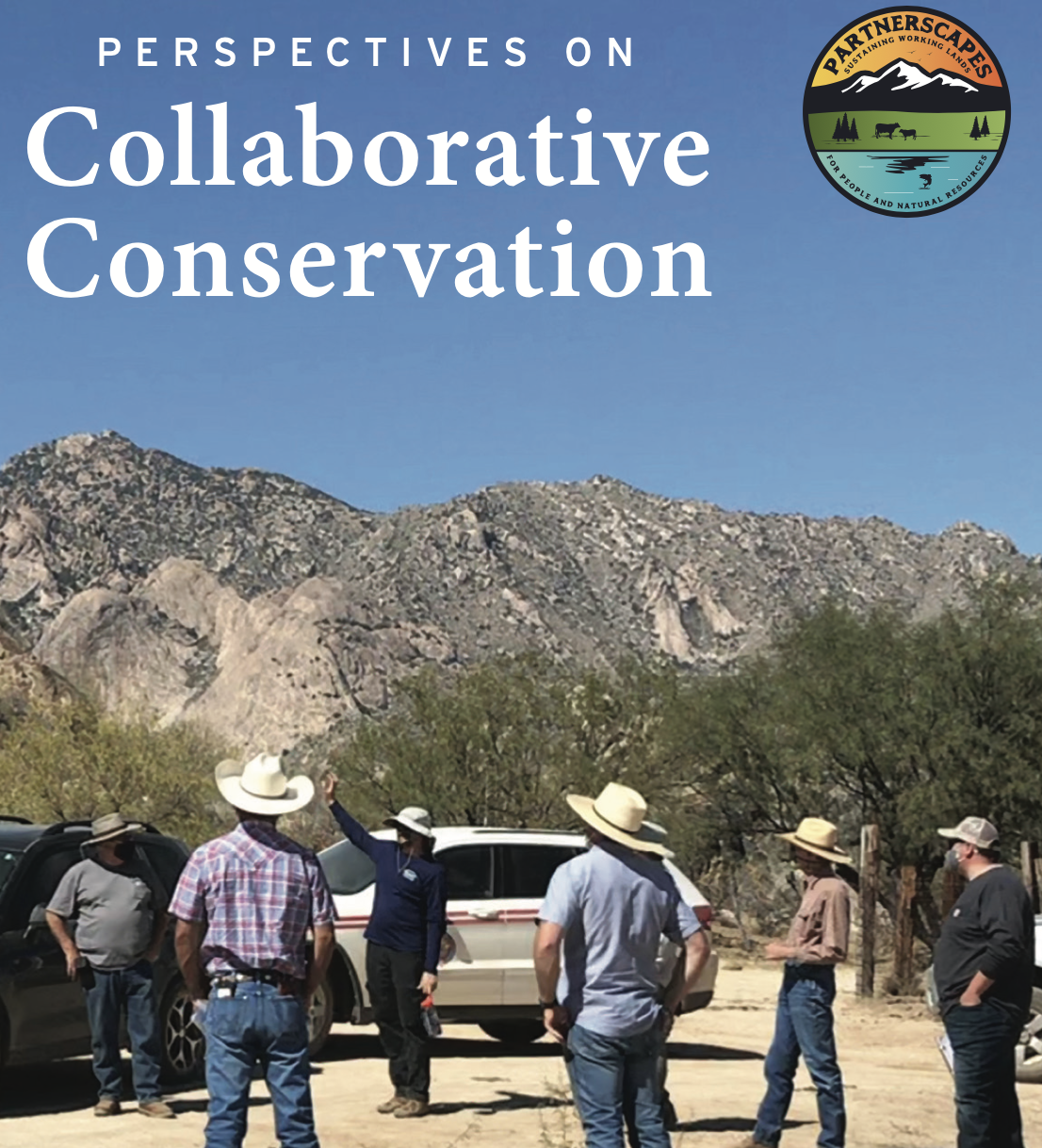
We are pleased to release a report summarizing what we learned from our West-wide survey of collaborative conservation, including insights about collaboratives, their accomplishments and how they are evaluating their efforts and sharing with others.
2020-12-11T16:05:50-06:00December 11th, 2020|

Facing Challenges Head on!

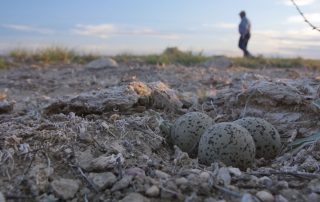
In 2001, rancher Russell Davis learned he had a bird on his land that the US Fish and Wildlife Service (USFWS) wanted to list under the Endangered Species Act: the Mountain Plover. The rest is history!

2020-12-03T09:27:23-06:00December 3rd, 2020|

Good Land Stewardship Can Be Economically Advantageous

How Partnerscapes board director, Gary Price, has been able to benefit from a variety of partnerships throughout his 40+ years of ranching as well as share information on a new ecosystem services market that plans to open in 2022 that may provide new opportunities for landowners.

2020-11-18T15:00:54-06:00November 18th, 2020|

Report on Partners for Conservation First Virtual Panel Zoom Event

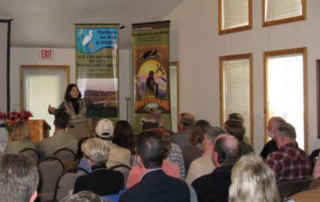
On August 12, Partners for Conservation Board Directors Jim Stone (Montana), Russell Davis (Colorado), Jay Tanner (Utah), Tom McAvoy (Connecticut) and Reese Thompson (Georgia) shared their experience working in partnership with conservation organizations and public agencies on efforts related to the conservation of sensitive wildlife species, or species that have a potential, pending or existing regulatory status. The panelists all have experience working collaboratively on these species on their private lands and in their landscapes. The experiences shared included not only a diverse set of states but also a diverse set of species, from bull trout to New England cottontail and from greater sage-grouse to gopher tortoise. The hour-long panel was followed by 30 minutes of questions. If you missed the live presentation but would like to see a video recording of the event it can be accessed at this link using the password Partners1!. Look for an email in the next few weeks inviting you to our next Zoom panel in September!

2020-09-14T16:47:12-05:00August 24th, 2020|

Report on Partners for Conservation First Virtual Panel Zoom Event

In July 8th Partners for Conservation held its first virtual panel on conservation partnerships and the origins of Partners for Conservation using the Zoom platform. Those that know us well, know that we are first and foremost an in-person, ideally across-the-kitchen-table type of outfit! However using our tried and true method of sharing landowner knowledge and experience in public-private conservation partnerships has not been possible during the current pandemic. Different times call for different methods and after some discussions we decided to try something different and four of the founding landowner directors agreed to spend some time on Zoom with what we thought might be at best several dozen interested partners. The interest was somewhat more than we expected! With just a bit of outreach primarily with and through the U.S. Fish and Wildlife – Partners for Fish and Wildlife Program, over 100 biologists, landowners and voluntary conservation partners RSVPed for the event. Of those that RSVPed over 80% were able to attend, even during the height of the busiest season for many landowners and conservation partners across the country. Even with the ability to work in the field with partners still constrained in many areas due to pandemic restrictions, we were heartened and humbled by the interest. The panel of four landowners spoke for about an hour and we reserved 30 minutes for questions and answers. Due to technical difficulties (read as operator error) the video of the event [...]

2020-09-14T14:02:45-05:00July 22nd, 2020|

Partners for Conservation Conducting Survey of Western Collaborative Conservation Efforts

Partners for Conservation is currently conducting a survey of over 260 collaborative conservation efforts underway in eight western states. One of the founding principles of  Partners for Conservation is that collaboration gets work done, and in this survey we hope to learn more about these groups, what they are working on and what they are getting done. While working with partners to identify their collaborations, we have already learned more about the broad spectrum of issues that these efforts are working on. Through the survey we hope to learn more about their work, what perspectives are involved, what they are getting done, and how the groups are tracking their progress toward their shared goals. The western states have a very robust collaborative conservation community, something that seems to us to be a bit unique as we talk to landowners and conservation partners around the country. Partners for Conservation strongly believes that diverse perspectives working collaboratively has huge potential to solve landscape-level challenges all across our nation. We hope that what we learn through the survey will help us talk more authoritatively to landowners, communities, and conservation leaders everywhere about what these efforts have accomplished and what they are still getting done. We are eager to share what we learn and will be developing a report later this summer to share broadly. We also hope to have at least one Zoom video conference sharing the results with the western collaboratives and others that [...]

2020-09-14T14:28:59-05:00June 26th, 2020|

From Cow to Consumer, a new focus on Grassland Soil Stewardship

This is the third in a series of articles focusing on PFC Director Gary Price and his family’s 77 Ranch in Texas. Gary Price, owner of 77 Ranch in north central Texas, has placed more and more emphasis over the years on what the consumer wants so that he can get the best price for his cattle. His first stop on this journey, which began about 10 years ago, was to convert his herd to crossbred Angus cows that can produce Certified Angus calves, which “has been great.” His cattle are also certified all-natural, meaning no antibiotics and hormones, and he has systems in place for tracking individual animals in the event some require doctoring. To meet the demand for beef from Europe, Gary must be able to verify the age of his cattle as well. Since the mad cow disease scare, most countries in Europe will not accept cattle over 30 months old (as the disease is very rare in cattle this young). Likewise, restaurant chains want to be able to name and trace the beef they serve to its place of origin. “We have nothing to hide,” says Gary. “We hire IMI Global out of Denver as a third-party auditor and another company out of Washington, DC verifies us on animal welfare. All of these things add value because they are what the consumer wants, and they separate us from those who sell beef as a commodity.” Ecosystem [...]

2020-09-14T14:31:31-05:00May 16th, 2020|

From Cotton to Bermuda to Native Grass: the 77 Ranch of Central Texas

This is the second in a series of articles focusing on PFC Director Gary Price and his family’s 77 Ranch in Texas. Around the turn of the 20th century, the Blackland Prairie region of Northeast Texas supported a massive amount of cotton production. “Navarro County, where we’re located, had more cotton than than any other county in the country,” says Gary Price.

2020-08-14T15:10:49-05:00May 16th, 2020|

Covid Concerns on the Ranch: Restaurants, processors, and the closeness entailed in loading a cow into a trailer

This is the first in a series of articles focusing on PFC Director Gary Price and his family’s 77 Ranch in Texas. “We are very fortunate to be on the ranch. Most days, we can wander around without interacting with people.” So begins the tale of how the Covid epidemic is affecting the award-winning 77 Ranch in east Texas, owned and operated by Partners for Conservation Director Gary Price and his wife and son.

2020-08-14T15:12:28-05:00May 16th, 2020|